Coyote: Trickster and Teacher
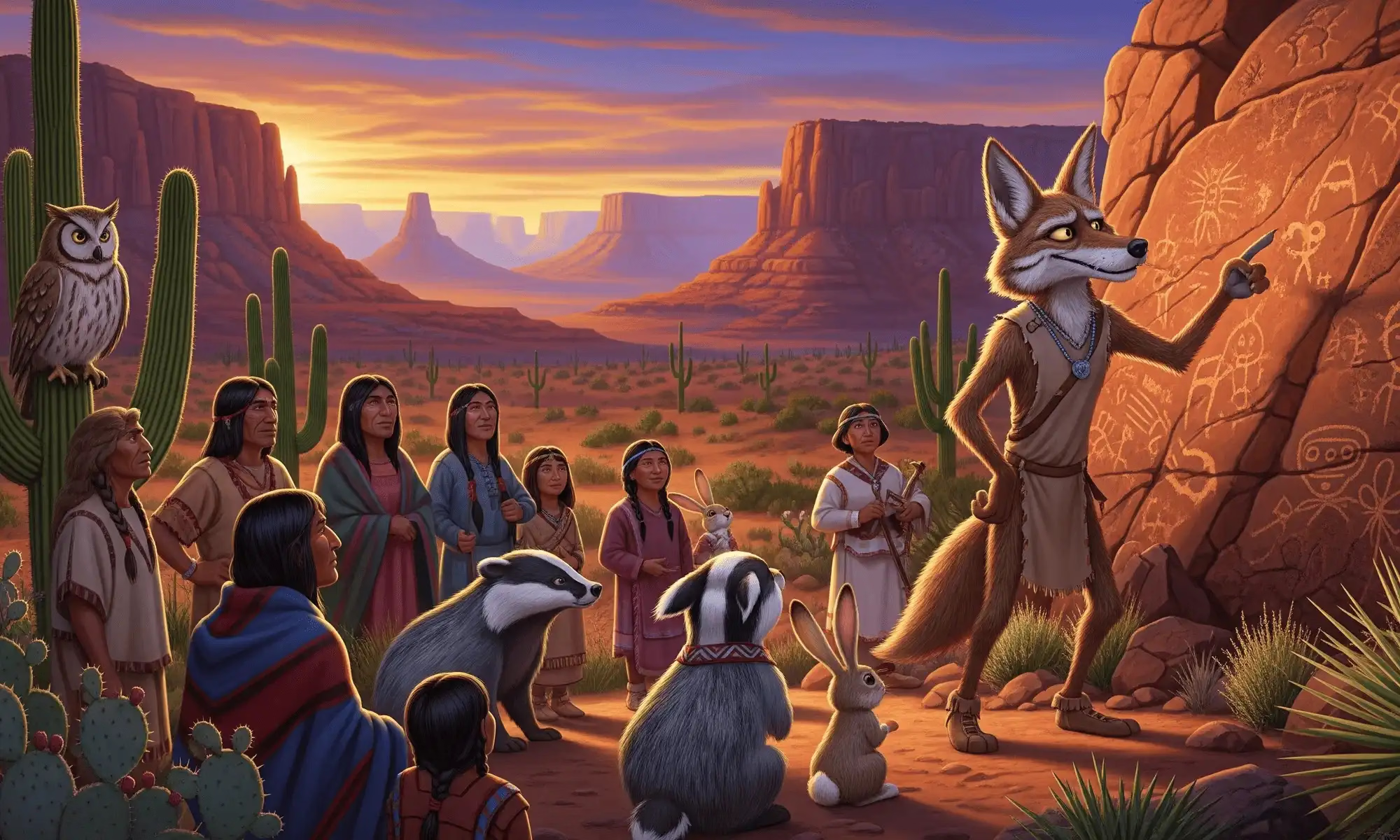
Across North America's diverse landscapes—spanning from expansive plains to arid canyons and dense forests—one figure stands out for his wit and cunning: Coyote, the trickster. Revered in Native American traditions, Coyote appears frequently in stories told by tribes ranging from the Navajo and Hopi in the Southwest to the Nez Perce, Lakota, and Blackfoot further north.
Coyote's character is multifaceted, embodying roles as a prankster, a fool, a creator, and a teacher. His tales are rich with humor and mischief, yet they also convey deep wisdom about the delicate balance between folly and insight. For instance, one story from the Lakota tradition recounts how Coyote outwits the powerful Thunderbird using cleverness rather than brute force, highlighting his role as both a trickster and a symbol of ingenuity.
The Trickster Spirit
Coyote embodies a complex character in Native American mythology, known for his cunning and sly nature. His relentless curiosity drives him to devise clever schemes that often pit him against more powerful adversaries or enable him to take what he wants through deception. Despite his ingenuity, Coyote’s plans frequently unravel, resulting in situations where he ends up humiliated or inadvertently teaching others valuable lessons from his mistakes.
In various legends, Coyote plays a pivotal role in shaping the world as we know it. For instance, one compelling narrative credits him with bringing fire to humanity, an act that symbolizes progress and enlightenment. Conversely, there are stories where Coyote's actions lead to the introduction of death into the human experience, highlighting his dual nature as both a creator and destroyer. Through these tales, Coyote illustrates the duality inherent in life, showing how every positive action can have unforeseen negative consequences.
Remarkably, despite his trickery and often self-destructive behavior, Coyote remains a beloved figure in many cultures. This paradox underscores the human fascination with characters who navigate life’s complexities through unconventional means. A specific example is seen in the story of how Coyote steals fire from the gods; this act not only highlights his cunning but also reflects a deeper exploration into themes of forbidden knowledge and its impact on societal evolution.
Teacher Through Folly
Though Coyote often acts foolishly, his missteps are not in vain. Each blunder serves as a stark lesson about the pitfalls of greed and arrogance. In one tale, Coyote attempts to impress others by imitating ducks gliding effortlessly on ice but ends up slipping and falling, causing him embarrassment and shame. This story underscores the critical importance of humility and understanding one's own limitations.
Coyote’s character embodies a paradox: he is both celebrated for his ingenuity and ridiculed for his imprudence. His adventures reveal that true wisdom often comes from recognizing when to hold back rather than pushing forward recklessly. For instance, in the story where Coyote chases after the moon reflecting on water, he learns that not every dazzling goal is attainable through sheer force of will.
Interestingly, despite his flaws, Coyote’s mistakes make him a more relatable figure to listeners and readers alike. His tales serve as cautionary narratives about the dangers of overconfidence and the virtues of prudence in decision-making. This nuanced perspective highlights how even celebrated heroes can be flawed but still offer valuable lessons.
Creator and Shaper of the World
In many Native American traditions, Coyote is more than just a trickster—he is also a profound shaper of the natural world. According to the Nez Perce tribe, Coyote's playful yet transformative acts arranged rivers and mountains in ways that still define landscapes today. Similarly, the Maidu tradition credits him with significant contributions to human existence, emphasizing his role not only as a catalyst for creation but also as an architect of enduring geographical features.
While Coyote’s reputation often centers on his mischievous side, his influence extends far beyond mere pranks. For instance, in one story from the Maidu tradition, Coyote manipulates natural elements to create human beings, demonstrating his dual nature as both a cultural hero and a disruptive force. This duality is crucial because it reflects the complex interplay between chaos and order that underpins many indigenous worldviews.
Interestingly, despite his often unpredictable behavior, Coyote's actions frequently result in beneficial outcomes for humans and the environment. In one particular tale from the Klamath tribe, Coyote uses his cunning to establish a balanced ecosystem, illustrating how even disruptive behaviors can lead to positive transformations. This nuanced perspective challenges simplistic views of Coyote as merely destructive or playful, revealing instead a multifaceted character deeply embedded in the fabric of creation.
Coyote’s Dual Nature
In Native American folklore, Coyote embodies a unique duality as both a trickster figure and a wise teacher. This dual nature reflects the complex reality that learning often comes through experiences—both successes and failures. For instance, one story recounts how Coyote's foolish actions led to a community crisis, but his willingness to learn from those mistakes ultimately brought about positive change.
Unlike many mythical characters who are static figures of old tales, Coyote remains relevant in contemporary Native storytelling traditions. Today, he continues to teach through the medium of oral stories, using humor and irony to convey profound lessons. For example, during a recent storytelling event at a reservation community center, an elder shared how Coyote’s antics mirrored the humorous yet poignant realities faced by younger generations today.
The enduring presence of Coyote in these narratives underscores his role as a cultural icon who bridges past wisdom with modern challenges. His ability to evolve and remain relevant shows that traditional teachings can offer practical solutions for contemporary issues, thereby enriching both individual lives and communal well-being.
The Living Legend
Coyote’s influence transcends the boundaries of mythology, weaving itself into modern literature, art, and even pop culture as a symbol of wit, survival, and adaptability. This cultural icon has captured the imagination of many, inspiring stories and characters that reflect his enduring legacy. For Native peoples, Coyote is far more than just an archetype; he embodies spiritual significance, bridging the gap between past and present.
Within Native American communities, Coyote serves as a conduit to ancestral wisdom, embodying both the sacred and the mundane aspects of life. As a spiritual figure, Coyote’s tales are retold during ceremonies and storytelling sessions, reinforcing communal bonds and imparting moral lessons that resonate across generations. For instance, one Navajo legend recounts how Coyote outwits powerful adversaries through cunning and quick thinking, illustrating his role as a teacher and guide in navigating life's challenges.
Remarkably, despite the passage of time and the encroachment of modernity, Coyote’s relevance remains undiminished. He continues to thrive within the cultural fabric of Native American societies, serving not only as a historical figure but also as an ever-evolving symbol that adapts to contemporary issues. This unique blend of tradition and modernity makes Coyote a living legend, deeply intertwined with the spiritual and social dynamics of these communities.
Frequently asked questions
Who is Coyote in Native American mythology?
What lessons does Coyote teach?
Is Coyote a creator figure?
Why is Coyote important in Native culture?

The Story of Barbarik: Was Barbarik the strongest warrior in Mahabharat ?
Barbarik was a powerful warrior of the demon clan during the age of Mahabharata. According to him, he had the power to e...
Mama Quilla – The Moon Goddess and Protector of Women
Discover the story of Mama Quilla, the Incan Moon Goddess. Learn about her origin, marriage to Inti, symbolism, and her ...